News
Parking spaces vanishing in cities: the SUV effect explained
Cars get wider each year. Result: hundreds of thousands of parking spaces will disappear from European cities by 2040.
Per: caradisiac
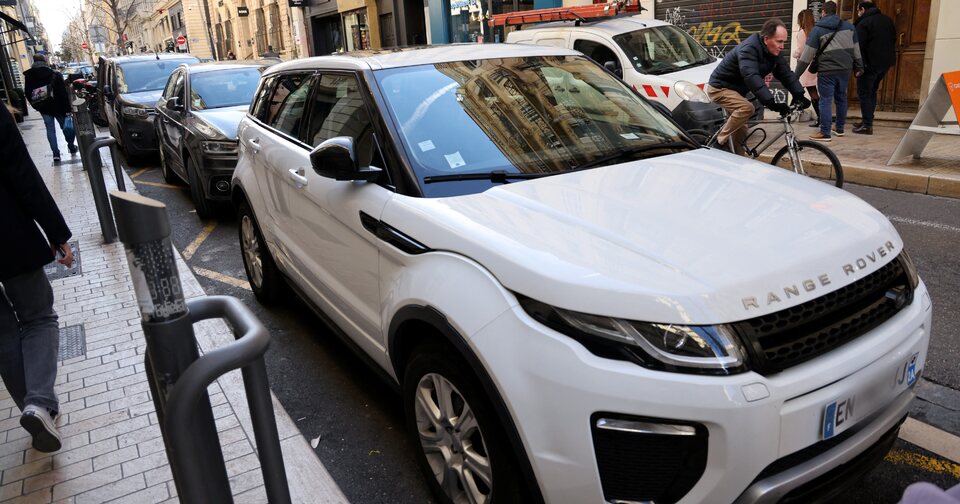
An urban parking crisis
Struggling to fit your new SUV into a parking spot? You're not alone. Vehicles gain width every year — on average 0.5 cm annually — while parking spaces remain unchanged from decades past.
According to a study by Transport & Environment and Clean Cities, this continuous growth is creating an unexpected consequence: the massive disappearance of parking spaces. Current standards define spaces as 4.80 to 5 meters long by 2.20 to 2.30 meters wide. Yet modern cars, especially SUVs which account for 56% of European sales, increasingly exceed these limits.
When urban authorities decide to enlarge spaces to accommodate new vehicles, they can only do so by reducing their number. An impossible equation in constrained urban space.
The figures that shock
By 2040, losses will be massive:
- London and Berlin: up to 118,000 spaces disappearing from each
- Rome: nearly 95,000 spaces
- Paris: 12,000 additional spaces
In Morocco and major North African cities, this trend is arriving more slowly—but it is arriving. Parking is becoming scarce and expensive in Casablanca, Rabat, and Fez.
Authorities tighten restrictions
Facing this crisis, urban policies are hardening. Several French cities (Paris, Lyon, Bordeaux) have already introduced higher parking rates for heavy vehicles.
Demands to governments and the European Union include:
- Strengthened weight-based surcharges
- Dissuasive registration taxes
- Outright ban on vehicles exceeding 1.92 meters in width from 2035 onward
As Marie Chéron, interim director of T&E France, puts it: "It's time for cars to adapt to cities, not the other way around."
A safety issue too
The problem extends beyond parking. Rising hood heights — increasing from 76.9 cm in 2010 to 83.8 cm in 2024 on average — pose growing risks to pedestrians and cyclists.
Impact zones now target the pelvis, chest, or head instead of the legs. Moreover, this elevation reduces the driver's direct sightline to the ground, particularly dangerous for children.
Without intervention, these trends would cause 400 additional deaths annually across Europe by 2040, mainly among pedestrians and cyclists.
What it means for drivers
The bill will be steep. Between rising parking costs, tightened surcharges, and gradual restrictions on larger vehicles, urban drivers face a choice: adapt their car to urban reality or pay more to drive and park in cities.
Source: caradisiac