News
Spain: Renault hardlines with unions on wage talks
Renault threatens to halt Spanish investments unless unions at Palencia and Valladolid accept its terms. A significant shift in the carmaker's social
Published on · Per: caradisiac
The ultimatum strategy catches observers off-guard
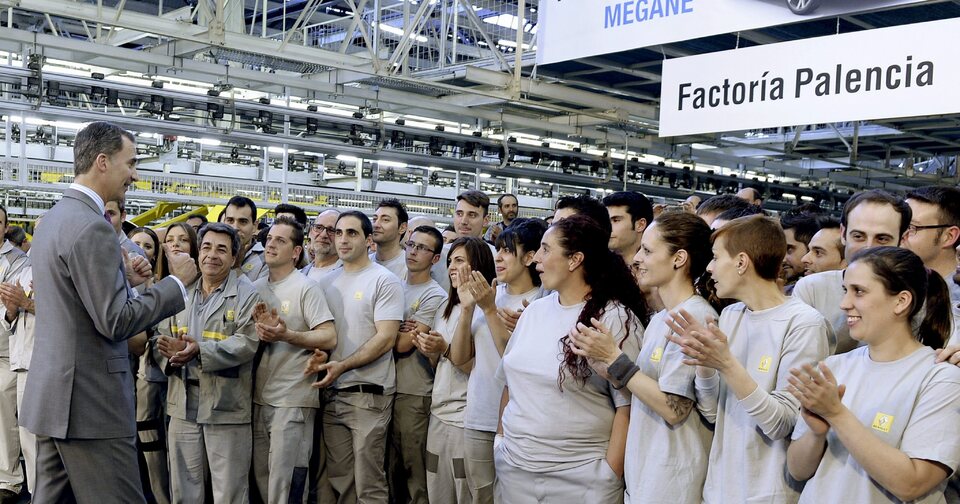
In an increasingly brutal automotive sector, Renault is changing tactics in Spain. The French carmaker presented its latest proposals to unions at Palencia and Valladolid plants — which employ roughly 6,000 workers — on a take-it-or-leave-it basis.
Worker representatives have negotiated for five months seeking wage increases and improved working conditions over three years. Renault offered inflation-linked adjustments and partial responses to welfare demands. Union rejection triggered a direct threat: without an agreement, no future Scenic or Megane production at these two plants, jeopardizing the facilities' long-term viability.
Calculated bluff or genuine leverage?
Both Spanish sites currently produce Captur, Symbioz, Austral, Rafale, and Espace — the bulk of Renault's combustion-engine lineup (aside from Clio 6). Eliminating this production capacity within two years would pose serious logistical challenges.
Douai factory, which assembles current Megane and Scenic models, already faces bottlenecks due to R5 dominance on assembly lines. Next-generation electric SUVs will use a new platform and include a range-extended version, potentially freeing capacity for relocation elsewhere.
The temptation to relocate
The real issue: labor costs. In Spain, an experienced worker earns roughly €1,500 net monthly. Elsewhere, wages are significantly lower:
- Morocco (Tangier) : €650 per month
- Turkey (Bursa) : €750–950 per month
Renault already assembles Dacia Sandero and Jogger in Morocco, and Clio in Turkey. These cheaper alternatives clearly weigh on negotiations.
A hardening climate
The automotive sector's situation — caught between electric transition uncertainty and Chinese manufacturer entry — creates instability. Multiple European plants suffer production shortfalls. While Stellantis seeks Chinese partners, Renault may accelerate its shift outside the EU.
What stands out most: this confrontation breaks Renault's reputation as a more socially conscious employer than competitors. Negotiations conducted via ultimatum rather than dialogue mark a genuine turning point.
Both sides must return to the table in coming weeks. Management seeks greater flexibility without expanding budgets; workers attempt to extract maximum concessions on the flexibility being demanded. Nothing is settled.
Source: caradisiac