News
EV Battery Costs & Lifespan: What Owners Really Need to Know
EV battery replacement can cost up to €25,000, but real-world data tells a more reassuring story. Here's what the numbers actually show about durabili
Per: caradisiac
The Real Facts About Your Electric Vehicle's Battery
Across Morocco and beyond, as electric vehicles become more common, owners are asking the same crucial question: How much does battery replacement really cost, and how long do these batteries actually last? French battery specialists at ACC (co-founded by TotalEnergies and Stellantis) provide reassuring answers based on actual field data.
Battery Lifespan: Longer Than Most People Think
Contrary to popular belief, modern EV batteries show impressive longevity. Analysis from Arval covering more than 8,000 vehicles across 30 different brands reveals:
- 93% average efficiency after 70,000 km
- Nearly 90% average efficiency after 200,000 km
Major failures and significant capacity loss remain rare before 200,000 km or 1,000 full charge cycles. Specialists estimate average battery lifespan at 15–20 years, which often outlasts the vehicle itself.
Two Types of Battery Failures: Electronic vs. Chemical
When batteries do fail, the problem falls into two distinct categories:
Electronic failures: Issues with power management or control board malfunctions. These are usually straightforward and affordable to fix.
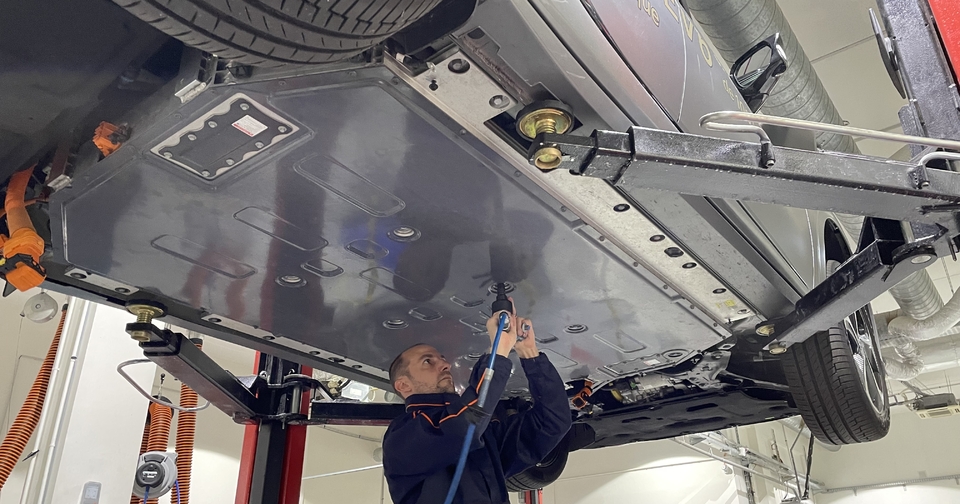
Chemical failures: Degradation within storage cells. Since connections are welded, replacing one failed cell typically requires replacing the entire module, raising costs considerably.
Real Repair Costs
Here's what to expect in Morocco and elsewhere:
- Localized repair: €1,500–€6,000 (approximately 15,000–60,000 MAD)
- Full replacement: €10,000–€25,000 (approximately 100,000–250,000 MAD)
Cost depends heavily on the type of failure and battery modularity. Batteries with more independent modules allow for cheaper, targeted repairs.
Safety and Strict Repair Protocols
In a serious crash, a pyrotechnic fuse (pyro-fuse) instantly cuts the high-voltage circuit to protect occupants and emergency responders. Replacing this safety device—even if battery cells remain intact—requires a qualified technician.
The repair process follows three steps: cell voltage diagnosis and defect identification, component replacement or peripheral maintenance, then safety validation before vehicle return.
Barriers to Affordable Repair
Several factors still limit the repair market:
- Sealed or structural batteries that restrict internal access
- Manufacturers locking diagnostic software (BMS) to their dealers
- Contractual clauses sometimes requiring full replacement after airbag deployment
Regulatory Change Working in Your Favor
Europe is accelerating this shift: EU regulations (2023–2030) progressively require manufacturers to enable diagnostic data access, increase critical material recycling, and ensure full transparency on battery environmental impact. In France, battery repairability is already included in national repairability indices and expected to become mandatory.
Source: caradisiac