News
How a Communist Yugo GV Took America by Storm — and Sold 141,000 Units
Tiny, poorly built, and mocked by critics, the Yugo GV still became the cheapest new car in America and sold over 141,000 units from 1985 to 1992.
Per: caradisiac
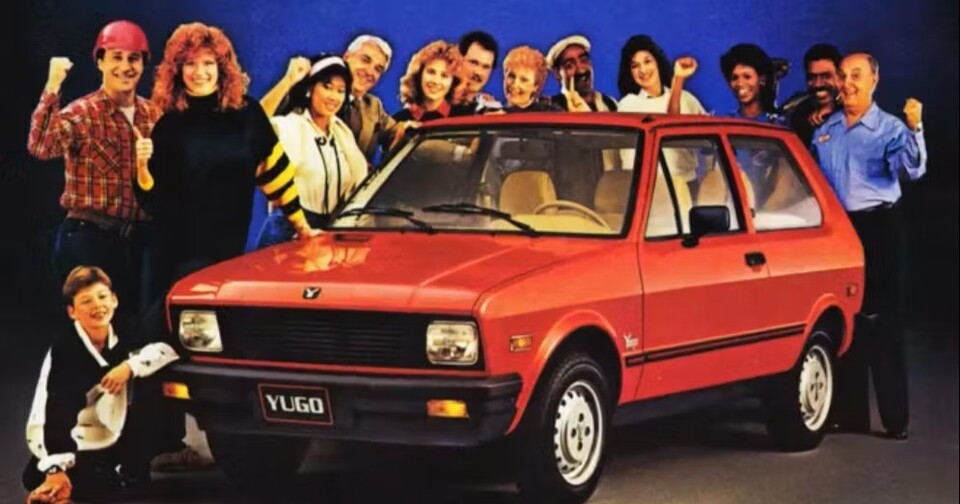
The Communist Car That Cracked the American Dream
It had a wobbly steering column, questionable build quality, and a name that became a punchline. Yet the Yugo GV pulled off one of the most remarkable — and unlikely — sales runs in American automotive history. Here's the full story.
The Man Who Made It Happen
The mastermind was Malcolm Bricklin, a polarising US entrepreneur who had already made his mark importing Subarus to America in the late 1960s. By 1984, the Fiat 124 Spider he was selling through his company IAI was about to go out of production, and Bricklin needed a new car to import — cheap, simple, and marketable.
He found it in the Zastava 45, a Yugoslav city car derived from the Fiat 128, built in Kragujevac by a country desperate for hard currency and eager to access the US market. IAI's technical director Tony Ciminera nearly lost his life test-driving it when the steering failed mid-run. Still, the price was just $1,900 ex-factory — the commercial potential was undeniable.
After negotiating directly with Zastava and swapping the old 903 cc engine for a more US-compliant 1,116 cc overhead-cam unit, the deal was done.
$3,990: The Price That Opened Every Door
In July 1985, the Yugo GV (Great Value) hit American dealerships at $3,990 — roughly $12,500 in today's money. It immediately became the cheapest new car in the country, undercutting the Chevrolet Chevette ($5,499) by a wide margin.
Bricklin backed it with an aggressive campaign: 400 dealers, 100,000 orders announced. Sales figures told the story — 3,995 units by end of 1985, then 35,969 in 1986, peaking at 48,812 units in 1987. Bricklin was making millions.
The buyers? College students, families wanting a second car, and anyone who couldn't stomach the used-car market. The car's atrocious reliability and thin dealer network, however, were ticking time bombs.
Range Expansion, Then Collapse
Bricklin sold Yugocars in 1988, pocketing a tidy profit. The range kept growing — GVL and GVX trims, a 1.3-litre engine, a convertible, a Renault automatic gearbox, even air conditioning. None of it was enough.
In 1992, the US Environmental Protection Agency (EPA) triggered a massive recall of 126,000 vehicles over emissions non-compliance. That same year, a US trade embargo on products from the war-torn former Yugoslavia killed imports for good.
Final tally: 141,651 Yugo GVs sold in the United States. Enough to cement its place in American pop culture — the butt of every parking-lot joke, but also a genuine cinema cameo: Bruce Willis and Samuel L. Jackson drove one in Die Hard with a Vengeance (1995), and it starred again in Who Is Cletis Tout? (2000) alongside Danny DeVito.
The Yugo story is a reminder that in the right market, at the right moment, an unbeatable price tag can move metal — at least until reality catches up.
Source: caradisiac