News
Toyota to Export Chinese-Made bZ3X EV to Southeast Asia for First Time
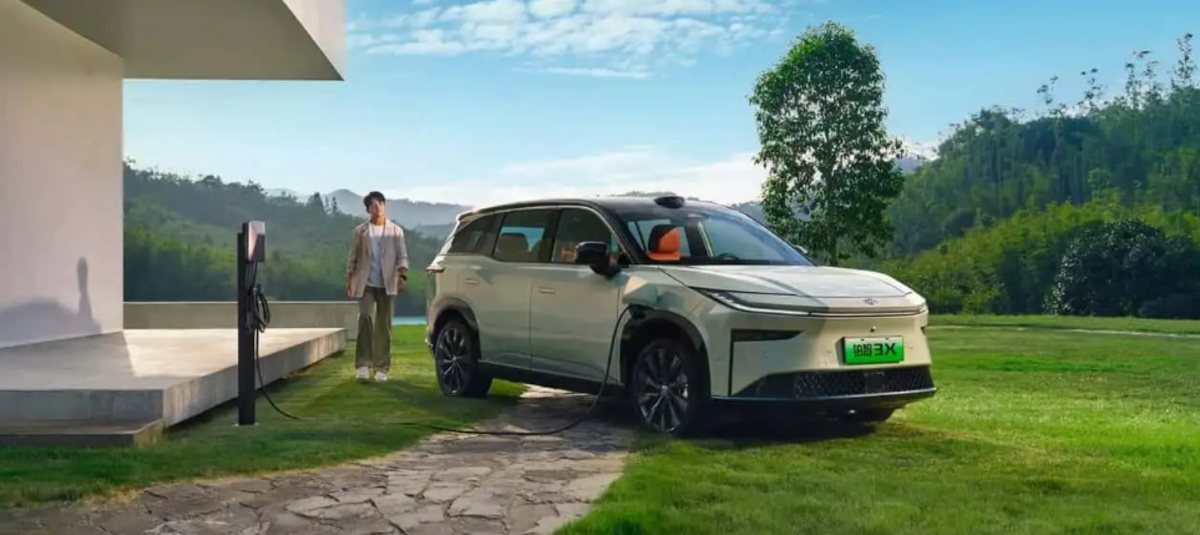
Toyota is considering exporting the bZ3X, its Chinese-made electric SUV, to Southeast Asian markets for the first time in the company's history.
Published on · Per: leblogauto
A Historic First for Toyota
Toyota is taking an unprecedented strategic step by exploring the export of the bZ3X, a compact electric crossover developed and manufactured by its GAC-Toyota joint venture in China, to Southeast Asian markets. Until now, this approach was unthinkable: vehicles sold in ASEAN have traditionally come from Japan, Thailand, Indonesia, Malaysia, or the Philippines — never from China.
This decision reflects the rising dominance of electric vehicles and the growing competitiveness of China's automotive industry, forcing global manufacturers to rethink their logistics and supply chains.
The bZ3X: An EV with Chinese DNA
The bZ3X is part of Toyota's Beyond Zero lineup and shares its technical foundation with the GAC Aion V, a model developed by Toyota's Chinese joint-venture partner. This technological kinship reflects the deep industrial integration between Toyota and GAC in China, where the Japanese group has adapted its development practices to local standards and market rhythms.
The interior design embodies the modern approach of Chinese EV makers: minimal physical controls, a large central touchscreen managing nearly all vehicle functions, and driver-assistance systems different from Toyota's familiar Safety Sense suite. One notable feature: a shelf integrated behind the front passenger seat, a practical solution typical of contemporary Chinese automotive interior design trends.
In terms of performance, the bZ3X boasts a claimed range of 610 kilometers on a single charge — a competitive figure for a mid-size electric crossover. Its Chinese market price, below $17,000 (approximately 170,000 MAD), is its strongest commercial advantage. Even accounting for customs duties and transport costs to Southeast Asia, the bZ3X would remain priced at an accessibility level rarely achieved by a premium-badge EV like Toyota in the ASEAN region.
Thailand and Philippines: Two Strategic Pathways
Toyota is evaluating multiple deployment scenarios for the bZ3X. One option involves assembling the vehicle in Thailand, ASEAN's primary automotive hub, where Toyota already operates significant production capacity. This approach would reduce import tariffs and leverage regional trade agreements that facilitate the movement of locally assembled vehicles throughout ASEAN.
However, for certain countries — notably the Philippines — direct import from GAC-Toyota's Chinese factories could prove simpler and more cost-effective than local assembly. This strategy would unlock the full benefits of Chinese production economies of scale, whose manufacturing costs for electric vehicles are structurally lower due to the vertical integration of battery and electronics supply chains.
The remaking of automotive supply logic is already underway across the region. In China, EV development moves faster and production costs run leaner, making direct imports increasingly viable for regional markets seeking competitive pricing without sacrificing brand prestige.
This strategic pivot signals a new industrial reality: electric vehicles are rewriting the rules of regional automotive organization.
Source: leblogauto