News
Electric cargo bikes are replacing vans in cities, and carmakers are leading the shift
In urban areas, electric cargo bikes are progressively replacing light commercial vans. Higher profitability, easy parking, and pedestrian-zone access
Per: caradisiac
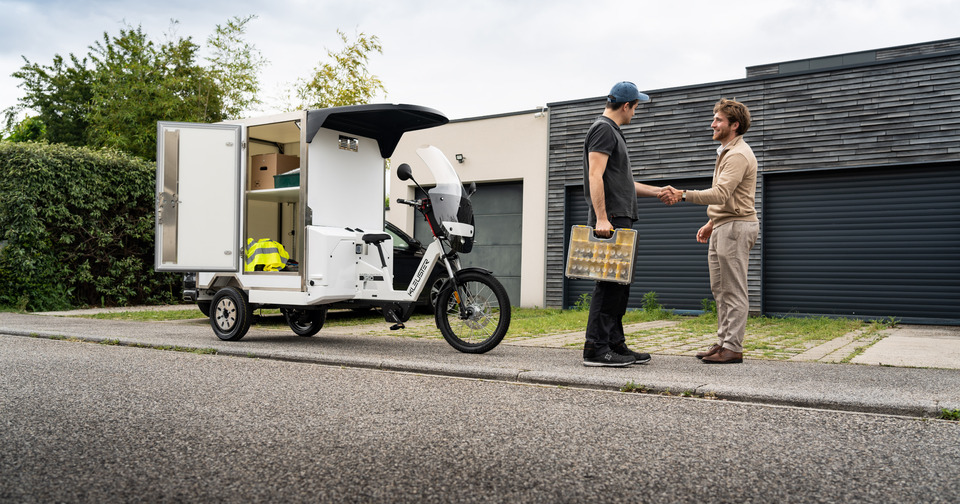
In cities, the white delivery van is becoming an endangered species. Electric cargo bikes are progressively establishing themselves as the solution for last-mile delivery, backed by compelling numbers: a cargo bike courier delivers between 20 and 25 parcels per hour, compared to barely 12 for a light commercial vehicle (LCV). The reason is straightforward: 51 to 60% of urban deliveries involve parcels weighing less than 200 kg over short distances (under 5-7 km).
The economics are ruthless
The last mile represents up to 50% of total transport costs. A van driver loses an average of 12 minutes per round trip searching for a parking space—a problem cargo bikes solve instantly. Capital investment is three times lower, and maintenance costs are reduced by 70%. For operators, the math is simple: profitability has doubled, before even counting environmental benefits.
Major automakers take center stage
2025 marked a decisive turning point. Automotive giants aren't just watching—they're actively participating.
- Renault Trucks assembles Kleuster 350 chassis at its Vénissieux plant
- Toyota partners with Douze Cycles to distribute and service the Hêta model at dealerships
- BMW licenses its patented pendulum chassis technology to Cube
- Peugeot (Stellantis) enters the family and professional segments with e-Longtail models
- Mercedes-Benz develops interchangeable containers with Onomotion, compatible with both vans and bikes
Component suppliers like Valeo and Bosch provide motors, transmissions, electronics, and safety systems (including ABS). The automotive industry is industrializing cargo bike logistics with its standards of robustness and maintenance networks.
Logistics giants follow suit
La Poste (French postal service) has deployed over 1,200 cargo bikes across 60 French cities, reducing the carbon footprint of deliveries by 50% compared to 2013. Amazon claims that one in two parcels delivered in Paris now uses sustainable transport modes, leveraging micro-hubs in repurposed parking garages and RATP bus depots.
The challenge: securing space
But this growth hits a real-estate wall: cargo bike logistics needs proximity. Goods must be transferred from heavy trucks to bikes as close as possible to city centers. "Real estate is the crux of the matter," experts note. With a potential replacement rate of 60% for light deliveries, expansion depends on municipalities' ability to designate dedicated urban logistics spaces (ELU).
Source: caradisiac